FALL 2025 SEMESTER SCHEDULE: STARTING THIS WEEK 8/12/25
TUESDAYS, THURSDAYS, SUNDAYS
8 A.M. – 8:30 A.M PT .
The journey of healing from the mild traumatic brain injury continues. I fell in April and hit my head stepping off an exercise machine. And so, tending to my balance and rehabbing new symptoms emerged – clawed toes.
I continue with qì gōng because it is nourishing. I am facilitating less qi gong as I continue with rehab. And, I find joy in moving mindfully with a community.
Join us in practice! All abilities and bodies are welcome. No experience necessary. Offered in the spirit of generosity. Donations accepted for community partner, Interfaith Movement for Human Integrity. No amount is too small or too big. All are welcome regardless of funds donated. (Make offerings to where and how you wish for or food, water, medicine, medical care, shelter, clothes.)
Suggested donations: sliding scale $1- $20 per session. No one turned away for lack of funds.
At the end of month donate directly to the organizations or send check or offerings to: K. Yep, P.O. Box 1313, Monterey Park, CA 91754 for the number of sessions you attended. Poems, seeds, cards, quotes, art and offerings also welcome.
All levels are welcome. Bring open heart, cultural humility, and water. Come early or late. Leave early if needed. As Liz, says: “Come as you are.”
Hello, community of practitioners…. Our practice group will continue to meet on zoom at the new time 6 a.m. HT/ 9 a.m. PT/ noon ET for 30 minutes of practice and then some folks stay and talk and share experiences with practice.
Today insights from Kuwa Jasiri, Debbie, Bonnie, Liz, Simone, Pati we’re shared and they orbited in different ways about returning home whether a physical place, to the body as it needs to move or unable to move, to the present moment at this age with a sense of temporality.
With our collective reflections on home today, coming home to my body and brain is not just when it feels good. The cycle of head pain and then ease has returned. New insights and remembering about listening to the present moment —- the different birds at sunrise and the coqui frogs at sunset, my head when it starts to feel pain and cognitive fatigue sets in after a short time, my mind and its critique of cognitive fatigue, and when needing to rest the brain.
I am reminded that one can not run away or numb out. That qì gōng or contemplative practice is an invitation to be with the present moment. It is a practice of being present with and being awake to what this is in the present moment and what is here. — even with all the contradictions and the cycles.
So this is brain relaxing and feeling joyous after a swim in the ocean AND the pulsating pain of cognitive fatigue after talking with someone on the phone for 40 minutes and after 8 months of rehab after a car ran a red light and hit my car. This is the present moment of tourists streaming off of a cruise ship to drink Kona coffee AND ICE coming to a rural, small town and abducting several people who were fleeing violence and having been kidnapped in their home country who pick the coffee as workers. This is awakening to the possibility that my brain may not heal in time to return to teaching full time in a month for the academic year AND being hopeful for continued healing.
As I finish writing this, a rainbow on the horizon has appeared amid the different bird sounds of the morning. And, my head is beginning to throb from cognitive fatigue of writing for 20 minutes. I am learning to hold both with tenderness. Breathing in, I feel the physical pain. Breathing out, I smile at the rainbow and the physical pain.
I hope you are well. I am sitting in a target/starbucks to get internet access. We have tried to set up internet for the last 3 days with no luck. I am currently in a new location with a 3 hour difference for the month of July. So, here are schedule changes due to various conditions:
Tomorrow/Saturday 7/12 and Sunday 7/13: No practice (waiting for internet tech person)
Next practice and new time starting Tuesday 7/15: 6 a.m. HT/ 9 a.m. PT/ Noon ET
I have been feeling your collective presence with me as I have been practicing primordial, 3 dan tian/curtain, and sitting qì gōng with mudras at sunrise. It has been humbling and joyous to not feel physical pain in my feet/legs and head after 3 days of consecutive practice here. First time pain free for consecutive days in 7 months or since the car accident! It may come and go and for now just resting in being with this state. Okay, the Starbucks is closing so I will say goodbye. Be well Kathy
Hello beloved community…. as you know the late Dr. Bingkun Hu (pictured above) was my second teacher. With humility and gratitude, honoring the fourth anniversary of his transitioning into the spirit world.
The practice schedule this week will shift due to a gathering of Dr. Hu’s students.
THIS WEEK: Tue June 10 (today) and Thur (June 12) (no practice Sat Jun 14, Sun Jun 15)
NEXT WEEK: Tue June 17 and Thu June 19
Moving the qì and feeling the qì during this time has been meaningful during continued healing from the brain injury and the collective call for beloved community in parts of the world facing genocide and militarism and in the area I reside with increased ICE presence and militarization of Tovaangar land (colonially known as Los Angeles)
It’s been 3 weeks since I left the post-concussion brain clinic. Yesterday, I had a lot of pain in my head after happily writing on the computer for 30 minutes. I was joyous to be able to write for that long because after the car accident it has been a physical struggle. I am motivated and interested in writing. I work as a professor. Creating knowledge is something I love to do. After the car accident, my brain struggles to write and read. So to have 30 minutes of pain free writing was gift. And then the head started throbbing and it was a big shift of emotion from joy to feeling mad, frustrated, scared, and sad.
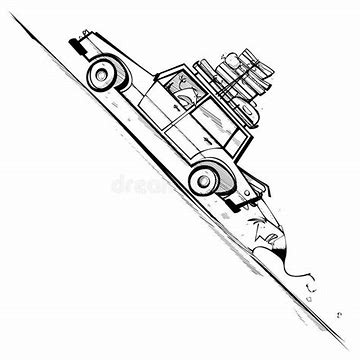
My mom use to call it “huffy puffy.” In some ways, the term fits. We bought the toy at a garage sale and the eyes would move as you pulled it long. And the eyes were creepy because they had trouble moving. So, this resonates because after the car accident my brain is working inefficiently as if I am struggling to push a car uphill. So, when I am doing mental tasks like writing on a computer for 30 minutes, it is costing my brain. After the car accident, parts of brain are not firing up and others are firing up too much and my brain is not working efficiently and sending me signals through pain. I am still learning the neuroscience so bear with me as I am figuring this out and synthesizing and integrating.
At the brain clinic, I learned that my post-concussion syndrome and dysautonomia means that my autonomic nervous system is off kilter. I learned that when the brain is working inefficiently or is “huffy puffy”, the neurons retract from each other. They stop receiving oxygen and other essential nutrients like amino acids and fatty acids sufficiently and they go on strike. And when the neurons slow and/or stop communicating head pain, cognitive fatigue, mental fog prevail.
The neurons in the brain need the nutrients, the chemistry and conditions to communicate, connect, to grow, to function. When Natalie, the cognitive therapist told me that neurons are finicky, this helped me understand my relationship to my brain. I said “its like me when I get hangry” and Natalie and I laughed.
Yesterday, I realized that when I have cognitive fatigue and my brain throbs, I have to tend to my brain and not get mad at it. I have to feed it and make sure its basic needs are being met. I can’t berate it or push through it and deny the pain and the frustration and fear. I can’t get lost in storylines about what it means to not finish my writing or to lose concentration. I can’t just assume it will work in whatever way I want and however long I want. Instead, I might try being in relationship to the brain.
Natalie in the brain clinic told me that “when the parasympathetic system (relaxation response) PSNS is in charge, healing happens.” When I have head pain, my autonomic nervous system is off balance — the sympathetic system (fight/flight/freeze/fawn) system is in charge when it does not need to be. There is no hungry bear chasing me as I am joyfully writing on the computer. When cognitive fatigue and head throbbing after 30 minutes on the computer happens, then the wrong system in the brain is in charge and thinks there is some danger when there is not. Neurons pull back from each other to send energy to systems to tackle the perceived threat.
I needed to switch to the PSNS. When the PSNS is in charge, neurons talk to each other, they connect, they are fed and receive essential nutrients. And, then our brain functions efficiently and the pain subsides.
I gently moved to my bed and lied down on my back. I closed my eyes. I started qì gōng breathing. I rested one hand on my belly and one hand on my chest. I inhaled and moved my breath from my belly to my heart. I exhaled moved my awareness from my heart to my belly. After a few moments, I moved my awareness from my hands on the front of my body to feeling my back laying against the bed. I used the bed as a sensory motor signal for my brain. As I inhaled, I felt the bed connecting to my lower back then to my shoulder blades and the back of my head and back down as I exhaled. Then, I moved my awareness to my sides, imagining two zippers zipping up my hips, my ribs to my armpits and to my ears and back down on the exhale. I then circled my awareness from my belly to my back then up the back of my neck to the top of my head, down my face to the hand on my heart and back to the belly.
Traditional Chinese Medicine for several thousands years frames breathing from the belly as related to the three energy centers or the three dan tians/ dan tiens/elixir field, among other things.
After fifteen minutes, my brain was still throbbing so much it was still painful and distracting to read, talk, and speak. I still needed to feed my neurons. I put on headphones and listened to binaural beats while I continued this qì gōng breathing from belly to the heart to the head. While the settler colonial research around the binaural beats as a mechanism for activating the PSNS is still at early stages, it is suggested that the brain interprets the two or binaural beats as its own and follows their frequency to calm. Similar to the belly breathing, the binaural beats draws from traditional practices that use steady, consistent drumbeats or chanting to inspire relaxation or PSNS. According to Psychology Today, it is suggested that binaural beats improve memory (both long-term and working memory) as well as help to strengthen your brain’s neurological connections.
According to traditional Chinese medicine, qì is in everything and is everywhere. And so, we are all interconnected. If we try on and inhabit this concept of qì, we practice in community in many ways. Where we practice is part of our community. Who we practice with is part of community. Our ancestors past, present, and future are in our community of practice.
If qì is in everything and is everywhere, this goes both ways. Qì can be abundant and shared. This abundance and collective quality can be encoded in our brains and bodies as “rest and digest” and the PSNS.
AND it also can be hoarded, stolen, destroyed, blocked, and made to disappear. This destruction and distortion of it can be encoded in our bodies like “huffy puffy” and the sympathetic system always on alert. This relates to how inequities are encoded in our bodies. Similar to post concussive syndrome, researchers are finding that long covid, adverse childhood experiences and intergenerational trauma send the autonomic nervous system (sympathetic and PSNS) into off kilter mode. With trauma some of the brain’s neurons respond by going on strike and retracted from each other. Some don’t fire up or can’t stay active for very long, Others are not being fed and nourished and shut down communication. And this disrupts brain function and living.
I am the granddaughter of undocumented men and women under the Chinese Exclusion act and of a maternal grandmother surviving sexual violence under intersections of heteropatriarchy and settler colonialism. My family’s response as the daughter and granddaughter of trauma is you had to push through pain in order to survive because they had to survive. They had to have sympathetic system (fight/flight/freeze/fawn) in control in order to exist.
And so, it is an intentional task and a reorientation to shift the brain to “rest and digest” of the PSNS. It is not only a new relationship to the brain. It is a new relationship to inherited trauma and oppression that disrupts the brain and the autonomic nervous system.
So qì gōng as a practitioner and as a teacher is a return to my community and my heritage of traditional Chinese medicine as a fourth generation Chinese American and as a woman of color. It is also a transformation of intergenerational gendered and racialized trauma from the early 1900s.
In today’s qì gōng practice, we riffed around these themes. Debbie, Simone, Kuwa Jasiri, and Liz gifted us with insights and shares that felt connective like neurons talking to each other (my paraphrasing):
* place-based practice and ancestors such as turtle, the bayou and accompanying each other
* slowing down to feel the grief to go deeper and experience what is underneath, vs. when we hold the grief at arms length
*when we don’t metabolize grief they control and lead us and in my case the neurons shut down and don’t get fed
* when we connect with others through gestures of loving kindness we nourish the neurons and the PSNS is in charge
*when our neurons are shut down we lose connections ranging from our brain being able to read and concentrate or ability to talk with our knees to stay physically balanced or walk up small stairs and when we see this through disability justice, intergenerational trauma — we see how 7 senses are connected to health equity and educational equity and decolonization
*we have choices when we get derailed and unexpected things happen like a car accident and brain injury or an elder asks us to go on a pilgrimage in a different way than we imagined the pilgrimage — we can fight it, we can toss it aside and deny it or we can integrate and meet with what shows up to what our path is such as learning neuroscience and integrating with qì gōng and liberatory learning– we can be tender, open, and curious and be deeper into the groove of why we are here at this time and in this form
even as i have been disrupted with post-concussive syndrome I can facilitate “with precision” (thank you KJ) and neurons can regrow with physical exercise and when the PSNS is in charge
Thank you for reading. Until the next post. May we be free from and do no harm. May all beings free from harm and do no harm. Be kind to yourself.




 Dr. Kathy Yep